
S.M.A.R.T. vs. Traditional Bone Grafting: Which One Do You Need?

S.M.A.R.T. bone grafting uses one small incision and a tunnel under the gum instead of lifting a flap, so most patients swell less and recover faster. Traditional guided bone regeneration opens the site, places a membrane, and gives your periodontist direct visual access. S.M.A.R.T. suits aesthetic-zone and moderate width defects; large vertical defects usually still need the open approach.

If you have been told you need a bone graft before a dental implant, you may have found two very different descriptions of the same goal, and almost no explanation of how the choice is actually made. Here is the version we give patients in the chair.

How traditional bone grafting works

Traditional bone grafting is usually some form of guided bone regeneration, or GBR. Your periodontist makes an incision along the ridge, lifts the gum tissue away as a flap, and exposes the bone underneath. That direct view is the point: the defect can be measured, cleaned, and shaped before anything is added.

Graft material is then packed into the deficient area. Depending on the case, that may be your own bone, processed donor bone, mineral derived from bovine sources, or a synthetic substitute. A barrier membrane goes over the top, keeping fast-growing gum tissue from filling the space before slower-growing bone can. Larger defects may also need tenting screws or a titanium-reinforced membrane to hold the space open mechanically.

The flap is then repositioned and closed. Because bone grafts must heal without tension over them, the surgeon often has to release the tissue to stretch it far enough to close. That is one of the trade-offs we will come back to.

Traditional GBR is well documented, works across a wide range of defects, and has decades of outcome data behind it. It is still the workhorse of ridge augmentation, and it is not going anywhere.

How S.M.A.R.T. is different

S.M.A.R.T. stands for Subperiosteal Minimally Invasive Aesthetic Ridge Augmentation Technique, developed by Dr. Ernesto Lee. The principle is borrowed from laparoscopic surgery: reach the site through a small remote access point rather than opening it up.

Instead of a ridge-crest incision and a flap, the S.M.A.R.T. technique uses a single small incision away from the graft site. Specialized instruments create a tunnel underneath the periosteum, which is the thin, tough membrane bonded to the outside of the bone. Graft material, typically combined with growth factors, is delivered through that tunnel and into the defect.

The key structural difference: the periosteum itself becomes the barrier. No separate membrane is placed, and in most cases no tenting screws are needed. Because the gum over the graft is never opened, the graft is never exposed, and the papillae (the small triangles of gum between your teeth) stay where they are.

That last point matters more than it sounds. Recession and lost papillae after grafting are difficult to correct later, and they are exactly what patients notice when they smile.

Side-by-side comparison

Traditional GBRS.M.A.R.T.
IncisionAlong the ridge crest, flap elevatedOne small remote incision, no flap
MembraneBarrier membrane requiredPeriosteum acts as the barrier
Space maintenanceMembrane, tenting screws, or titanium meshTunnel and periosteal tension
SwellingModerate to significant, proportional to flap sizeTypically noticeably less
Typical recoverySeveral days of visible swelling; soft dietMost patients back to routine quickly
Membrane exposure riskA recognized complication of open graftingLargely eliminated; nothing is exposed
Soft tissue effectReleasing the flap can reduce vestibular depthGum architecture preserved
Healing before implantCommonly around four to six monthsComparable; biology, not technique, sets the pace
Best useLarge vertical defects, block grafting, sites needing direct accessAesthetic zone, width deficiency, buccal plate, ridge preservation

Where S.M.A.R.T. has the clear advantage

Front teeth. The upper anterior region is where grafting complications are most visible and least forgivable. Preserving the gum contour and papillae is worth a great deal here, and it is the scenario S.M.A.R.T. was designed around.

Buccal plate loss. The thin outer wall of bone in front of a tooth root is fragile and frequently gone by the time a patient is referred. Rebuilding width through a tunnel avoids the tension-free-closure problem that open grafting creates in exactly this location.

Patients who cannot afford downtime. Less tissue disruption means less swelling and a faster return to normal activity. For patients balancing surgery against work and family, that is a real clinical variable, not a marketing line.

Thin or fragile soft tissue. When there is not much keratinized tissue to work with, opening a flap and then stretching it to close over a graft creates risk. Not opening it avoids that risk entirely.

Ridge preservation at extraction. S.M.A.R.T. principles apply well to grafting a socket at the time of extraction, where the goal is to stop collapse before it starts. More on why that timing matters on our ridge preservation page.

Where traditional GBR is still the better choice

Large vertical defects. Gaining bone height is harder than gaining width, and it demands rigid space maintenance. When we need to hold a defined volume open against soft tissue pressure for months, a titanium-reinforced membrane, tenting screws, mesh, or a block graft does that job better than periosteal tension.

Long multi-tooth spans. Grafting a single site through a tunnel is one thing. Rebuilding a large edentulous span with predictable contour usually calls for direct access.

Infected or compromised sites. If a site needs thorough debridement, a failed implant removed, or granulation tissue cleared, you need to see it. A tunnel does not allow that.

Complex defect morphology. A three-walled defect contains graft material on its own. A one-walled defect does not. When the anatomy is unusual, direct visualization changes the plan mid-procedure in ways a closed approach cannot.

Sinus cases. If your bone deficiency is height in the upper back jaw, the answer is likely a sinus lift rather than either ridge-grafting approach. Different problem, different procedure.

A practice that only offers one technique will tend to describe every case as suiting that technique. We perform both, which means the comparison above is a clinical judgment rather than a sales position.

How we decide which one you need

The decision is made after imaging, not before it.

A CBCT scan shows us what a visual exam and a two-dimensional X-ray cannot: how much bone remains, whether the deficiency is width or height, how many bony walls are intact, and where the sinus and nerve sit relative to the planned implant. From there we assess soft tissue thickness and the amount of attached gum tissue, the position of the site in your smile line, and whether an extraction is happening at the same visit.

Your medical history is part of the decision too. Smoking, uncontrolled diabetes, and certain bone-density medications all affect graft predictability, and they affect it regardless of which technique is used.

Most patients leave that consultation with a specific recommendation and a clear reason for it. If your case is one where either approach would work, we will tell you that, and explain what you would be trading.

Common questions

Is S.M.A.R.T. bone grafting painful?

Most patients report significantly less discomfort than they expected. Because no flap is lifted, there is far less tissue trauma driving post-operative pain and swelling. The procedure itself is performed under local anesthesia, with sedation available.

How long before I can get my implant?

Graft maturation typically takes several months regardless of technique, commonly four to six, and longer for larger augmentations. The technique changes your recovery experience, not the biology of bone healing.

Does insurance cover bone grafting?

Coverage varies widely by plan and by the reason for the graft. We verify benefits before treatment and provide a written estimate so there are no surprises.

Can S.M.A.R.T. fix bone loss around an existing implant?

Sometimes. Regenerating bone lost to peri-implantitis is possible in selected cases, but it depends on the defect shape and whether the infection can be fully controlled first.

What happens if I skip the graft?

Usually one of two things: the implant cannot be placed at all, or it can be placed but in a compromised position with thin bone over it. Neither is a good long-term outcome. In some cases a shorter or narrower implant is a legitimate alternative, and we will say so.

Talk it through with a periodontist who does both

Bone grafting is not a single procedure with a single right answer. If you have been told you need one, or that you cannot have implants at all, it is worth a second look with three-dimensional imaging and a specialist who performs both approaches.

Request a consultation at Pinnacle Center Dental Implants and Periodontics in Pittsburgh, or call (412) 787-8590.

Dr. Katherine L. Roll and Dr. Kelly B. Williams are board-certified periodontists trained in the S.M.A.R.T. bone grafting technique.
Understanding Bone Grafting: What You Need to Know Before Dental Implants


Dental implants have become an increasingly popular solution for replacing missing teeth, offering a durable and natural-looking option that restores both function and aesthetics to your smile. However, before the implant can be placed, there are often necessary preparations to ensure its success. One such preparation is bone grafting, a procedure that helps create a strong foundation for the dental implant. Understanding the role and benefits of bone grafting is essential for making informed decisions about your dental care. Today, we will explore what bone grafting involves, why it might be needed, and how it contributes to the success of dental implants.

What is Bone Grafting?

Bone grafting is a surgical procedure used to repair or rebuild bones through the transplantation of bone tissue. In dentistry, it is commonly performed to prepare the jawbone for the placement of dental implants. Over time, if a tooth is missing, the jawbone may begin to deteriorate or resorb, losing density and volume. This loss can make it difficult or even impossible to place a dental implant without first rebuilding the bone.

There are several types of bone grafts used in dental procedures:

  • Autografts: This type involves taking bone from another part of your body, such as the chin or hip. Autografts are often considered the gold standard in bone grafting because they use the patient’s own tissue, which reduces the risk of rejection and promotes faster healing.
  • Allografts: Allografts use bone from a donor, typically sourced from a bone bank. The donor bone is processed and sterilized to ensure it is safe for transplantation. Allografts are a common choice when there is not enough bone available from the patient for an autograft.
  • Xenografts: These grafts use bone from another species, usually bovine (cow). The bone is processed and sterilized to make it safe for human use. Xenografts are often used to add volume to the jawbone.
  • Alloplastic Grafts: Alloplastic grafts are synthetic materials, often made from hydroxyapatite or calcium phosphate, which are biocompatible and can encourage bone growth.

Bone grafting offers several benefits, including providing a stable foundation for dental implants and helping to prevent future bone loss. By restoring the bone structure, the graft creates a solid base for the implant, ensuring its stability and longevity.

Why Might You Need a Bone Graft Before Dental Implants?

There are several reasons why a patient might need a bone graft before getting dental implants. Bone loss can occur for various reasons, such as periodontal disease, trauma, or long-term tooth loss. When a tooth is missing, the jawbone in that area may start to deteriorate because it is no longer stimulated by chewing forces. This process is known as bone resorption, and it can lead to insufficient bone density or volume to support a dental implant.

Bone density and quality are crucial factors in the success of dental implants. Implants require a certain amount of bone to anchor securely in the jaw. If the bone is too thin or too soft, it may not be able to support the implant properly, leading to potential complications or implant failure.

Several scenarios necessitate bone grafting for implant success:

  • Insufficient Jawbone Height or Width: In some cases, the jawbone may not have enough height or width to accommodate a dental implant. Bone grafting helps to rebuild the bone to the necessary dimensions.
  • Bone Loss Due to Periodontal Disease: Periodontal disease, also known as gum disease, can lead to significant bone loss. Bone grafting can help restore the bone lost to disease and create a stable foundation for implants.
  • Trauma or Injury: Accidents or injuries that result in tooth loss can also damage the surrounding bone. Bone grafting can repair this damage and prepare the area for a dental implant.

The Bone Grafting Procedure: What to Expect

Understanding the bone grafting procedure can help alleviate concerns and prepare you for what to expect. The process typically involves several steps:

  1. Consultation and Planning: We will evaluate your oral health and determine if bone grafting is necessary. This evaluation may include X-rays or CT scans to assess bone density and structure.
  2. Preparation: Before the procedure, you may receive a local anesthetic to numb the area, or in some cases, sedation to help you relax. We will then make a small incision in the gum to expose the bone.
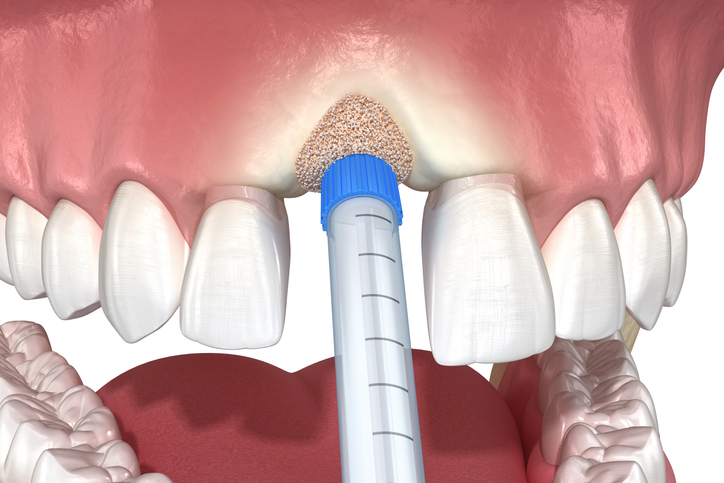
  3. Graft Placement: The chosen bone graft material (autograft, allograft, xenograft, or alloplastic) is carefully placed in the area where the bone is deficient. The graft is then secured with small pins, screws, or a special membrane to hold it in place.
  4. Closure and Healing: The incision is closed with stitches, and the healing process begins. The bone graft will gradually integrate with the existing bone, a process known as osseointegration, which can take several months.

During the procedure, various materials are used depending on individual patient needs and the specific condition of the jawbone. Our team will choose the best option to ensure the most favorable outcome for your bone grafting and subsequent implant placement.

Common concerns about the bone grafting procedure include questions about discomfort, recovery time, and potential risks. While some discomfort and swelling are normal after the procedure, these can usually be managed with prescribed pain relievers and cold compresses. Recovery time varies depending on the extent of the graft, but most patients can expect a few days to a week of downtime before resuming normal activities. Risks or complications are rare but can include infection, graft rejection, or problems with the healing process.

Recovery and Aftercare Tips for Bone Grafting

The recovery period after a bone graft is crucial for the success of the procedure. Here are some tips to help ensure a smooth recovery:

  • Manage Discomfort: Over-the-counter pain relievers or medications prescribed by your periodontist can help manage any discomfort. Applying cold compresses to the outside of your face can also reduce swelling.
  • Maintain Oral Hygiene: Keeping your mouth clean is essential to prevent infection. We will provide specific instructions on how to care for your mouth, which may include gentle rinsing with a saltwater solution and avoiding brushing directly over the graft site.
  • Diet and Activity: Eating soft foods and avoiding strenuous activities for the first few days can help promote healing. Stick to foods that are easy to chew and won’t irritate the graft site.
  • Follow-Up Appointments: Regular follow-up appointments are important to monitor the healing process and ensure the graft is integrating properly with the existing bone.

Following our post-operative instructions is key to achieving optimal healing and the success of your bone graft. It is important to avoid smoking, as it can significantly hinder the healing process and increase the risk of complications.

The Role of Bone Grafting in the Success of Dental Implants

Bone grafting plays a vital role in the overall success and longevity of dental implants. By providing a stable foundation, bone grafting helps ensure that the implant can be securely placed and integrated into the jawbone. This stability is crucial for the function of the implant, as it allows for normal chewing and biting forces without the risk of implant failure.

In addition to supporting the implant, bone grafting offers long-term benefits by helping maintain the structure of the jawbone and promoting overall oral health. It prevents further bone loss and preserves the natural contours of your face, which can be affected by bone deterioration over time.

If you are considering dental implants, consulting with us is the best way to determine if bone grafting is necessary for your specific situation. We can assess your bone structure, discuss your options, and develop a personalized treatment plan that ensures the best possible outcome for your dental implant procedure.

Ready to Take the Next Step in Your Dental Implant Journey?

Understanding bone grafting is an important step in the journey to successful dental implant placement. By providing a strong and stable foundation, bone grafting enhances the success rate of implants and contributes to long-term oral health. If you are considering dental implants and want to learn more about your suitability for bone grafting, we encourage you to schedule an appointment with our team. Let us help you restore your smile and improve your oral health with the expertise and care you deserve.

Facts About Bone Grafting

Did you know that with today’s modern techniques, bone grafting is now considered a routine treatment? A bone graft can fix a variety of facial and dental problems and may be required in some cases. If you’ve been told in the past that you’re not an ideal candidate for getting a tooth implant, call us to ask about how a sinus graft makes it possible for many of our patients to receive dental implants. Here are a few things you should know if you’re thinking about getting a dental implant or think a bone graft could help you.

It’s a routine procedure!

Bone grafting has become a standard practice. Depending on the quantity and quality of jawbone, most procedures take place in our office and we use local anesthesia or conscience sedation to relieve any anxiety.

Bone loss has been virtually eliminated!

The only reason our jaws have the amount of the bone that they do is because of the presence of existing teeth. Complicated procedures were developed in the past to attempt to rebuild jaws that had atrophied due to missing teeth and disuse but with the modernization of bone grafting and dental implants, we can prevent jawbone atrophy all together.

There are a variety of materials that can be used.

The bone grafting material you need could come from a variety of sources. Generally, we use bone taken from your hip, jaw, or lower knee but today we have the ability to grow bone where needed or obtain bone from a tissue bank. We also use special membranes to help protect the bone graft and encourage bone regeneration.

Bone grafting allows your body to rebuild itself.

The human body uses most bone grafting materials as a frame on which it can grow new bone. Over time the graft material will be replaced with new bone through your body’s own process of bone regeneration. Maintaining a healthy amount of bone tissue around your teeth is crucial in keeping up your oral health.

If you have a missing tooth, congenital defect, or have had a traumatic jaw injury, and you’re wondering whether you may need bone grafting, give us a call. We can answer your questions, and present the treatment options that are best in your individual situation.

The History of Bone Grafting

The concept of bone grafting is nothing new. In fact it has been an important part of medicine as far back as the early 1600’s and in recent years has become a standard procedure for people who need a dental implant or have had a traumatic jaw injury. Shortly after the invention of the microscope, the Dutch doctor Jacob van Meekeren performed the first bone grafting operation on a soldier with a damaged skull. Unfortunately, back then doctors didn’t have the knowledge or bone grafting materials that we have today and in order to save the soldier, Jacob van Meekeren was forced to use a piece of dog bone as implant material. Van Meekeren was pleased with the surgery’s success, but it wasn’t until the soldier returned asking to have the implant removed that van Meekeren discovered just how successful it really was!

In the 1600’s, the Christian church looked at things a little differently and this poor soldier with a piece of dog bone in his skull was excommunicated after the church considered him to be part dog. What was upsetting for the soldier aided in the discovery of how well bone grafting actually worked. In the process of attempting to remove the bone graft, van Meekeren discovered that the bone had healed too well and was actually irremovable!

Bone grafting developed over the next 150 years and by 1821 the first graft of tissue from one point to another of the same individual’s body, known as an autograft, was performed in Germany. During WWI and WWII, bone grafting continued to develop as more soldiers became crucially wounded and a need for advanced surgeries became necessary. After another fifty years the first synthetic ceramic product was cleared for use in 1991.

As you can see, bone grafting has a much longer history than you might have imagined! To find out if you are a good candidate for bone grafting, give us a call!