Do you feel discomfort when you bring your teeth together or does your bite feel off? If your teeth do not align properly, you may need an occlusal adjustment to correct malocclusion. Malocclusion is the dental term for a misaligned bite. Malocclusion may cause oral health issues if left untreated. An occlusal adjustment can correct malocclusion and restore the bite for normal function, such as chewing. It may also prevent a number of dental disorders from developing in the future.
Occlusal adjustment is a procedure that modifies the surfaces of a tooth or teeth with the goal of improving how the teeth make contact. It involves the grinding and shaping of selected tooth surfaces to remove interferences from your teeth, thus correcting misaligned teeth. An occlusal adjustment is sometimes called bite adjustment, bite alignment, or occlusal equilibration.
Occlusion of the Teeth
In a dental context, occlusion means the contact between your teeth. It describes the way your upper and lower teeth fit together, as occurs during chewing or when your mouth is closed. Typically, the upper teeth should slightly overlap the lower teeth when your jaw is at rest. A healthy bite is also one in which your upper teeth and lower teeth make equal contact together. And your teeth should not be significantly rotated or twisted.
Malocclusion of the Teeth
Malocclusion of the teeth is when your teeth are misaligned. It is also referred to as crowded teeth, crossbite, open bite, overbite, or underbite. Misalignment of the teeth can lead to oral health issues if left untreated, such as dental fractures, premature wearing away of the enamel, and teeth grinding and clenching, among other issues. In addition, misaligned teeth may not perform certain functions well, such as chewing and biting. Misaligned teeth can also impact how you speak. An occlusal adjustment can be used to correct misaligned teeth or a bad bite.
Symptoms of Malocclusion of the Teeth
Symptoms of malocclusion can range from minor to severe. Typical symptoms of malocclusion include:
- Improper alignment of your teeth
- Breathing through your mouth rather than your nose
- Chipping or cracking of teeth
- Clenching or grinding your teeth
- Damage to dental implants or dentures
- Discomfort when biting or chewing
- Frequent biting of your inner cheeks or tongue
- Speech problems, including the development of a lisp
- Temporomandibular joint (TMJ) problems
Diagnosing Malocclusion of the Teeth
A periodontist can diagnose malocclusion of teeth through a routine dental exam. Your periodontist will examine your teeth and may perform x-rays to determine if your teeth are properly aligned. If your periodontist detects malocclusion, they will classify it by type and severity. There are three major classes of malocclusion:
- Class 1: Class 1 Malocclusion is the most common classification of malocclusion. In this type of malocclusion, your bite is normal, but there is overcrowding, spacing between the teeth, or other alignment irregularities. Class 1 malocclusion may or may not require treatment.
- Class 2: Class 2 Malocclusion is known as an overbite. In Class 2 Malocclusion, your upper teeth and jaw significantly overlap your lower teeth and jaw.
- Class 3: Class 3 Malocclusion is also called an underbite. In Class 3 Malocclusion, your lower teeth and jaw overlap with your upper teeth and jaw.
Common Causes of Malocclusion of the Teeth
Malocclusion is typically an inherited condition that is passed down from generation to generation. It can also occur due to certain conditions or habits that produce changes in the jaw. A common cause of malocclusion is too little or too much room for new teeth to erupt. Other causes of malocclusion include:
- Cleft lip and palate
- Losing baby teeth too early
- Injuries and trauma
- Impacted tooth
- Lack of oral care
- Mouth breathing
- Prolonged bottle-feeding or use of pacifiers
- Poor childhood oral habits, such as thumb-sucking
- Poor tongue and swallowing habits
- Sustained orthodontic issues during childhood and adolescence
What to Expect from an Occlusal Adjustment
When performing an occlusal adjustment, we will have you bite down on a colored strip of paper. This will allow us to see how your teeth are making contact. A healthy bite is one in which both make equal contact together. If only one side is making contact, it indicates problem areas with your bite. We will then smooth the problem areas on your tooth or teeth just enough to remove the interference. This process is repeated until all areas of your teeth meet together properly. After reshaping your teeth, wet will ask you to bite down on the colored paper again to ensure proper bite alignment.
Importance of Occlusal Adjustment
An occlusal adjustment removes interferences from your teeth, treating misaligned teeth, crooked teeth, a poor bite, and other dental problems. There may be interferences in your mouth due to dental work, such as crowns and fillings, or heredity reasons. An occlusal adjustment can remove these interferences to ensure a healthy bite. An occlusal adjustment can also help prevent dental cracks and fractures. If you have a bad bite, some of your teeth sustain more impact than others when you bite down or close your mouth. This can lead to the wearing away of enamel and dental fractures over time. You may also need a bite adjustment before you undergo cosmetic orthodontic procedures, such as braces.
Contact Us Today!
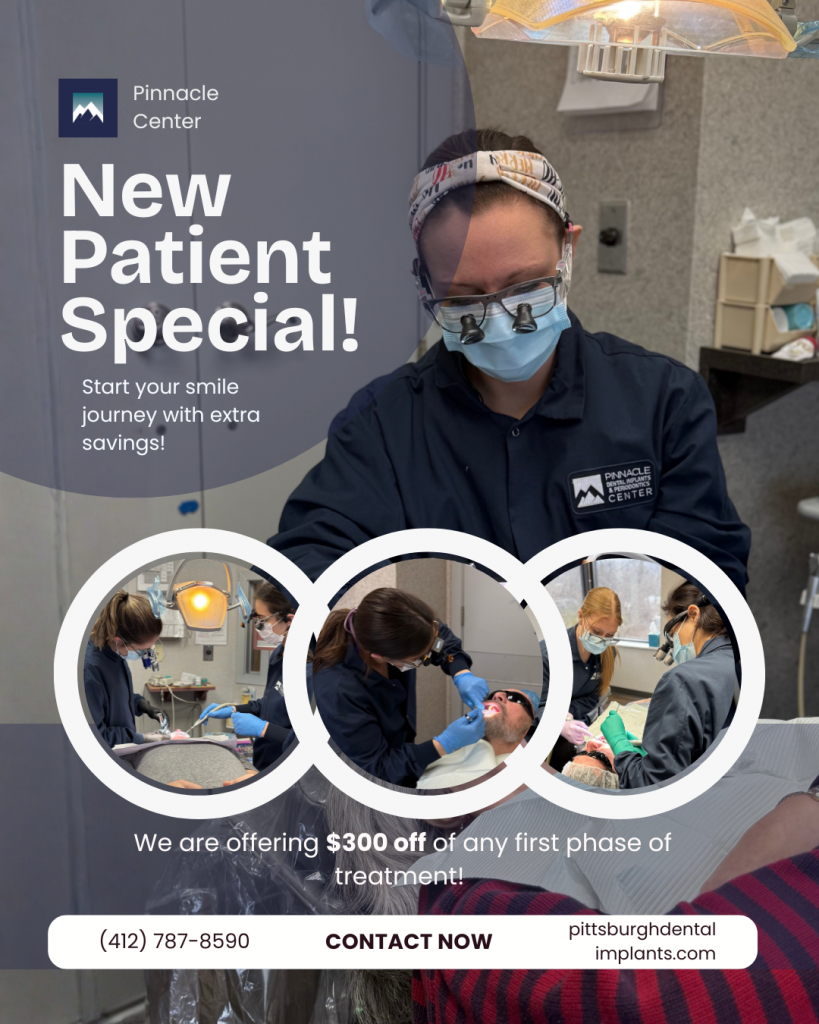
Pinnacle Center Dental Implants and Periodontics is a board-certified specialty dental practice located in the greater Pittsburgh area. At Pinnacle Center Dental Implants and Periodontics, we can evaluate your bite and determine whether an occlusal adjustment is the treatment you need to ensure a healthy bite. Our team is committed to treating and caring for the whole person, not just the patient, to create a relationship based on compassion and respect. Every day we make a difference in our patients’ lives, aiming to educate and partner with them in choosing the best treatments possible to create a healthy smile for life. Contact us to learn more about our services or to schedule an appointment with periodontists Dr. Silberg or Dr. Roll.
 Periodontal disease